

Prefer Terraform? Open the “Add connection” page in the Trigger.dev dashboard and use the
Terraform wizard to generate a ready-to-apply script. The wizard creates everything described
below and pre-fills our AWS account ID for you.
Prerequisites
Before you start you’ll need:- An AWS account with permission to create VPC, EC2, and ELB resources
- A resource in a VPC subnet that you want to expose (RDS instance, ElastiCache cluster, internal API, etc.)
- The Trigger.dev AWS account ID — find this on the “Add connection” page in your Trigger.dev dashboard, in the “I have my details” or “Step-by-step guide” cards
- A VPC that contains the resource, with at least one private subnet per Availability Zone you want to serve from
PrivateLink connections are zonal. If your resource lives in a single AZ, your connection will
only be available from that AZ. For higher availability, ensure target groups can route to
multiple AZs.
Step 1: Create a target group pointing at your resource
The target group is how the NLB will know where to forward traffic. AWS requires a target group when creating a load balancer, so we’ll set this up first.1
Open the target groups page
Go to EC2 → Target Groups → Create target group.
2
Choose a target type
- IP addresses for RDS, ElastiCache, or any resource you can reach by IP
- Instances for EC2 instances you own
- Application Load Balancer if your resource sits behind an ALB
3
Configure the target group (first step of the AWS form)
On the Specify group details page (the first of two steps in AWS’s target-group form), set: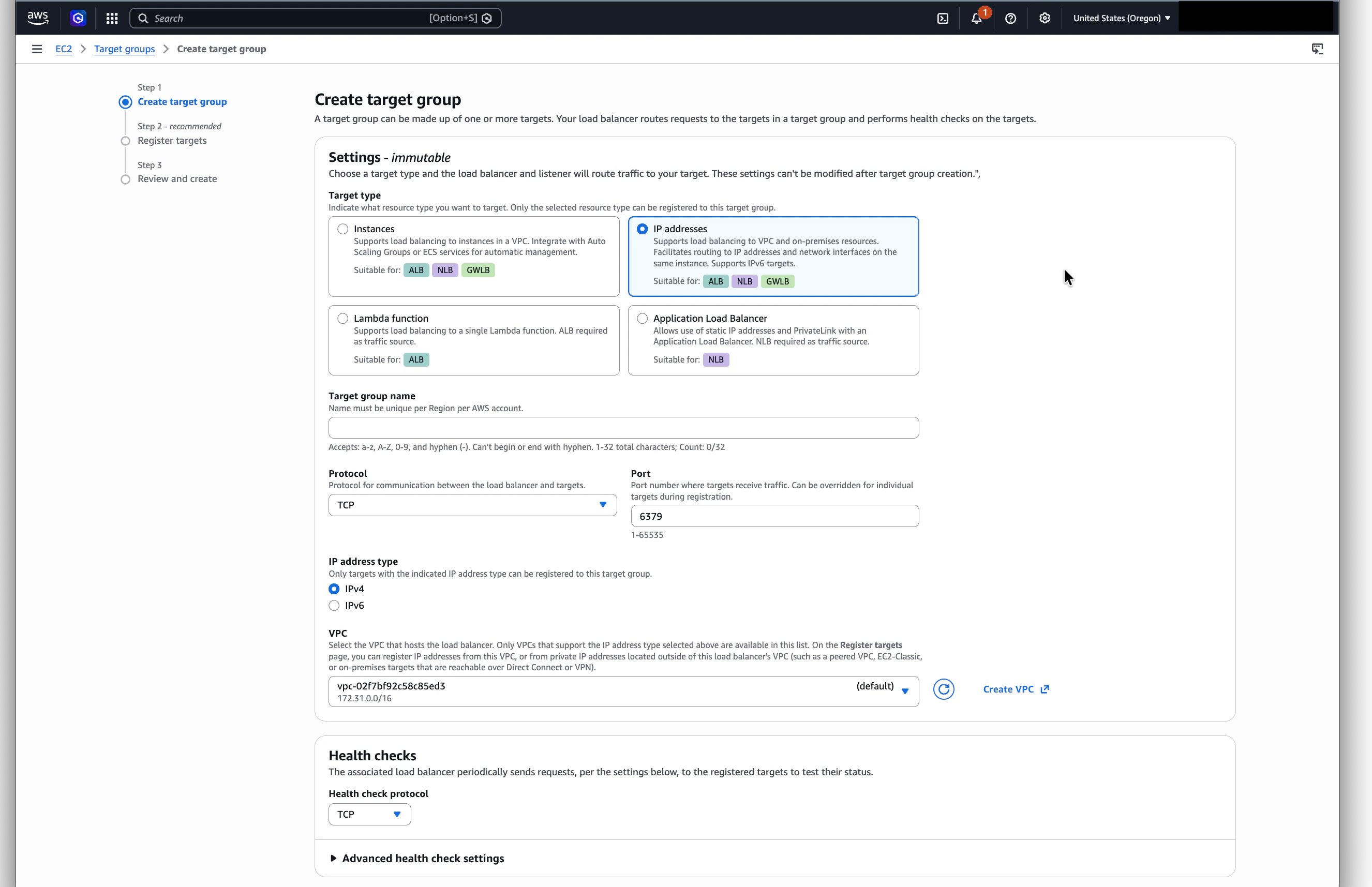
- Name: e.g.
trigger-postgres-tg - Protocol: TCP
- Port: the port your resource listens on (5432 for Postgres, 6379 for Redis, 3306 for MySQL, etc.)
- VPC: the VPC where your resource lives (this must match the VPC you’ll use for the NLB)
- Health check protocol: TCP
4
Register your targets (second step of the AWS form)
On the Register targets page — the second step of the IP target-group flow — paste the
private IPs of your resource and set the port to the same value you picked above. Click
Include as pending below, then Create target group.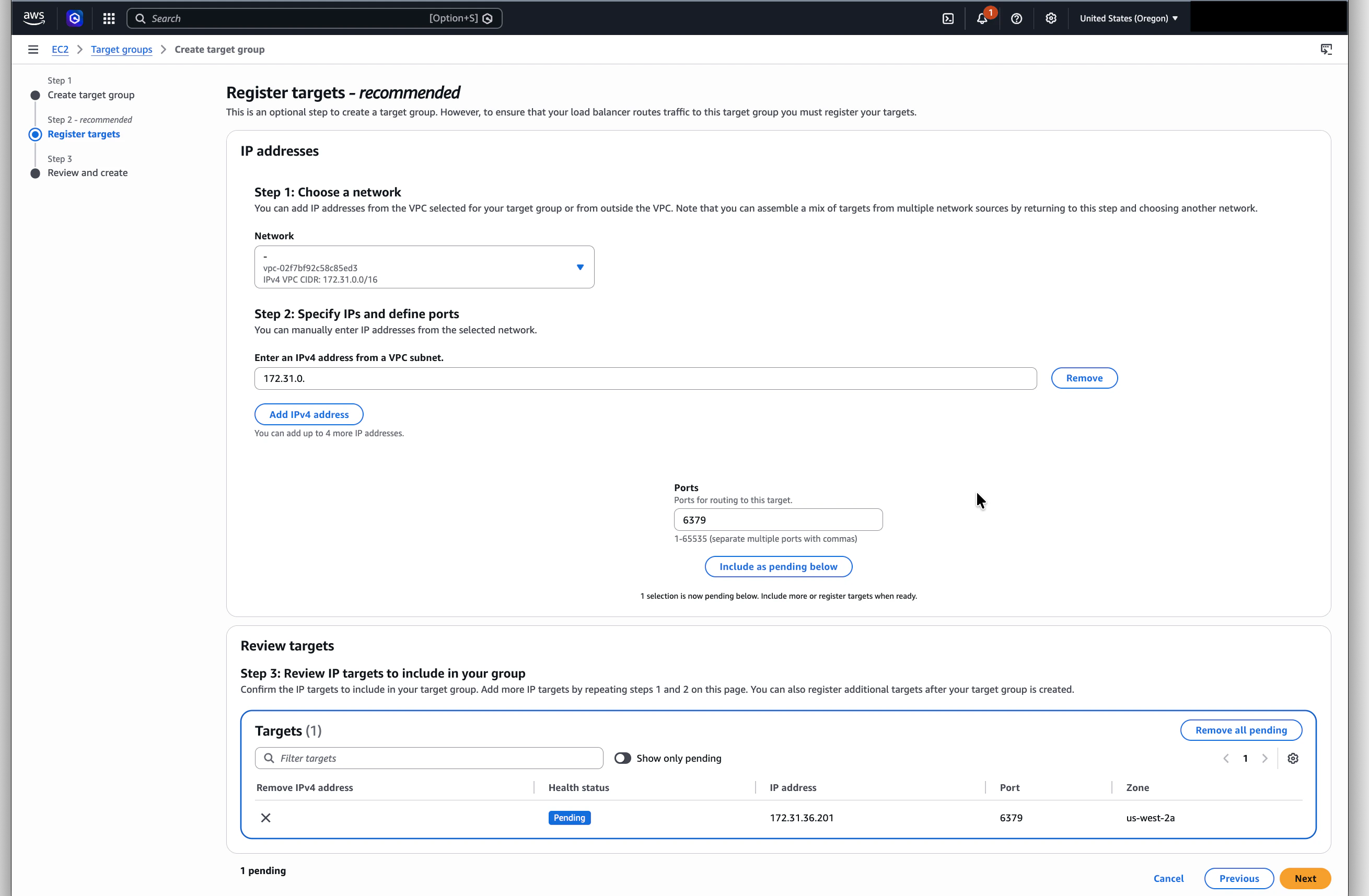
Step 2: Create an internal Network Load Balancer
The NLB is what PrivateLink exposes to Trigger.dev. It must be internal (not internet-facing).1
Open the EC2 console
Go to EC2 → Load Balancers → Create load balancer and choose Network Load Balancer.
2
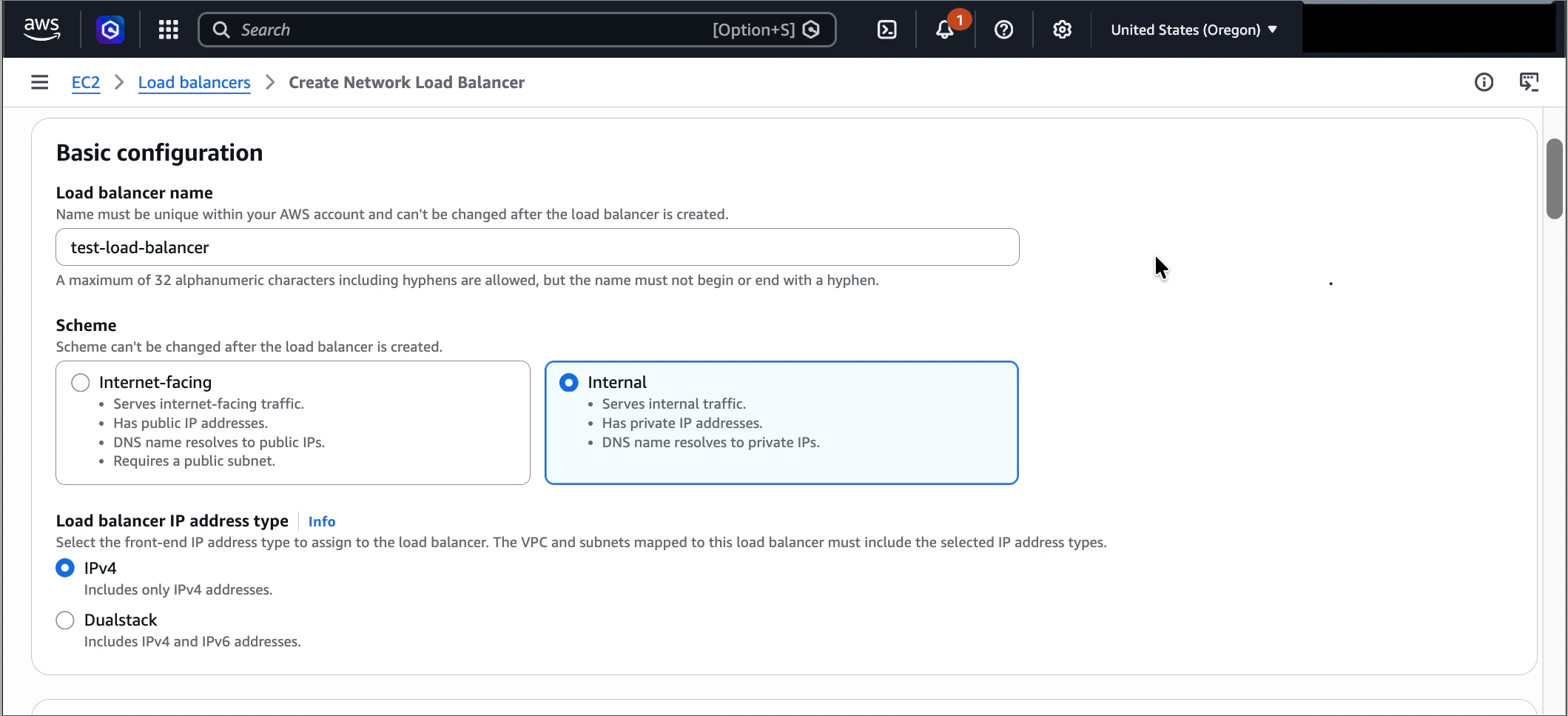
Configure the basics
-
Name: something descriptive, e.g.
trigger-postgres-nlb - Scheme: Internal
-
IP address type: IPv4
3
Choose VPC and subnets
Pick the same VPC as your target group. Select one private subnet per AZ that should serve traffic.
Each subnet you select adds an availability zone to the endpoint.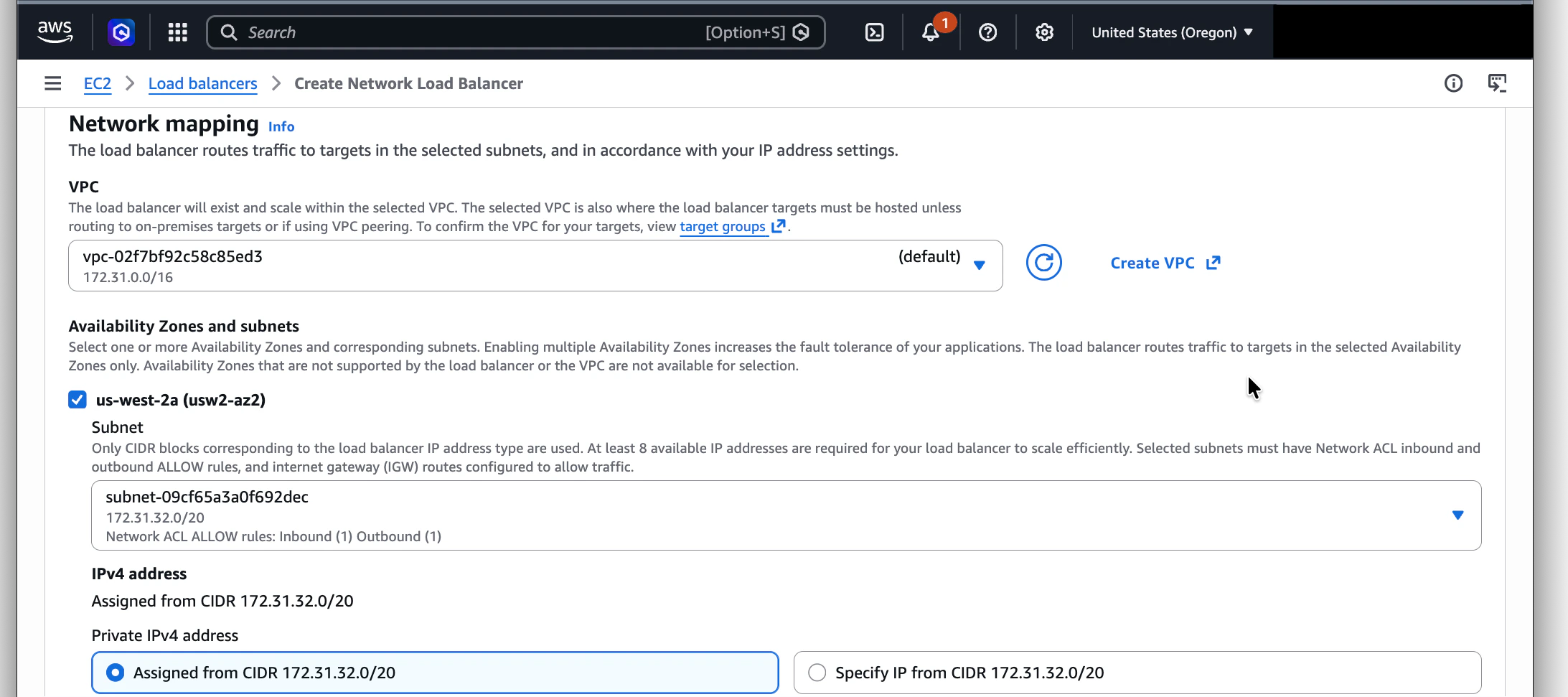
4
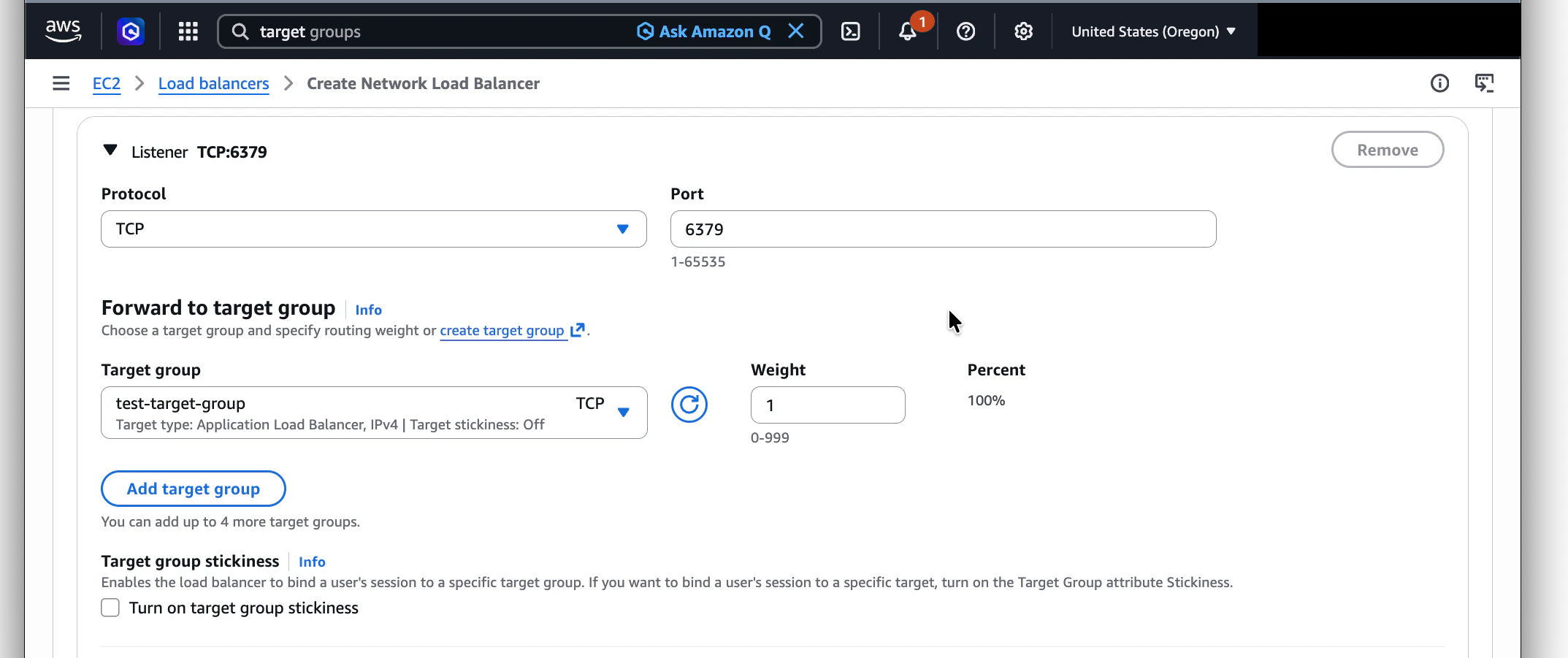
Add a TCP listener forwarding to your target group
Under Listeners and routing, configure:
- Protocol: TCP
- Port: same as your target group port (5432 for Postgres, 6379 for Redis, etc.)
-
Default action: forward to the target group you created in Step 1
5
Create the load balancer and wait until it's Active
Click Create load balancer. Provisioning takes 1–2 minutes — wait until the NLB’s State
column shows Active before moving on. The endpoint service in the next step won’t list the
NLB until it’s fully active.
6
Disable PrivateLink inbound rules enforcement on the NLB
Once the NLB is Active, open it and go to its Security tab, then click Edit. If a
security group is attached, AWS enables Enforce inbound rules on PrivateLink traffic by
default — leaving it on can cause traffic from the Trigger.dev VPC Endpoint to be silently
dropped before reaching your listener. Uncheck Enforce inbound rules on PrivateLink traffic
and save.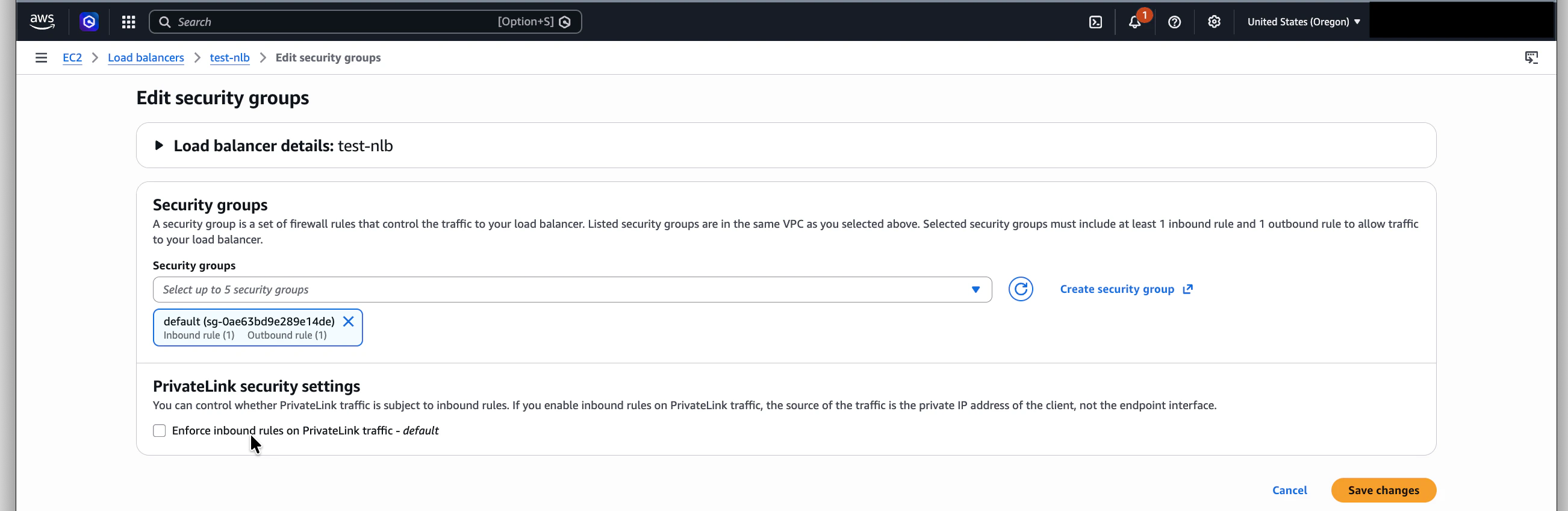
Step 3: Create a VPC Endpoint Service
This is the resource that PrivateLink consumers connect to.Confirm the NLB from Step 2 is in the Active state before starting this step. It won’t appear
in the Available load balancers dropdown until it has finished provisioning.
1
Open the VPC console
Go to VPC → Endpoint services → Create endpoint service.
2
Configure the endpoint service
-
Name: optional, but useful for identification, e.g.
trigger-postgres-endpoint - Load balancer type: Network
- Available load balancers: select the NLB you created
-
Require acceptance for endpoint: No (recommended)
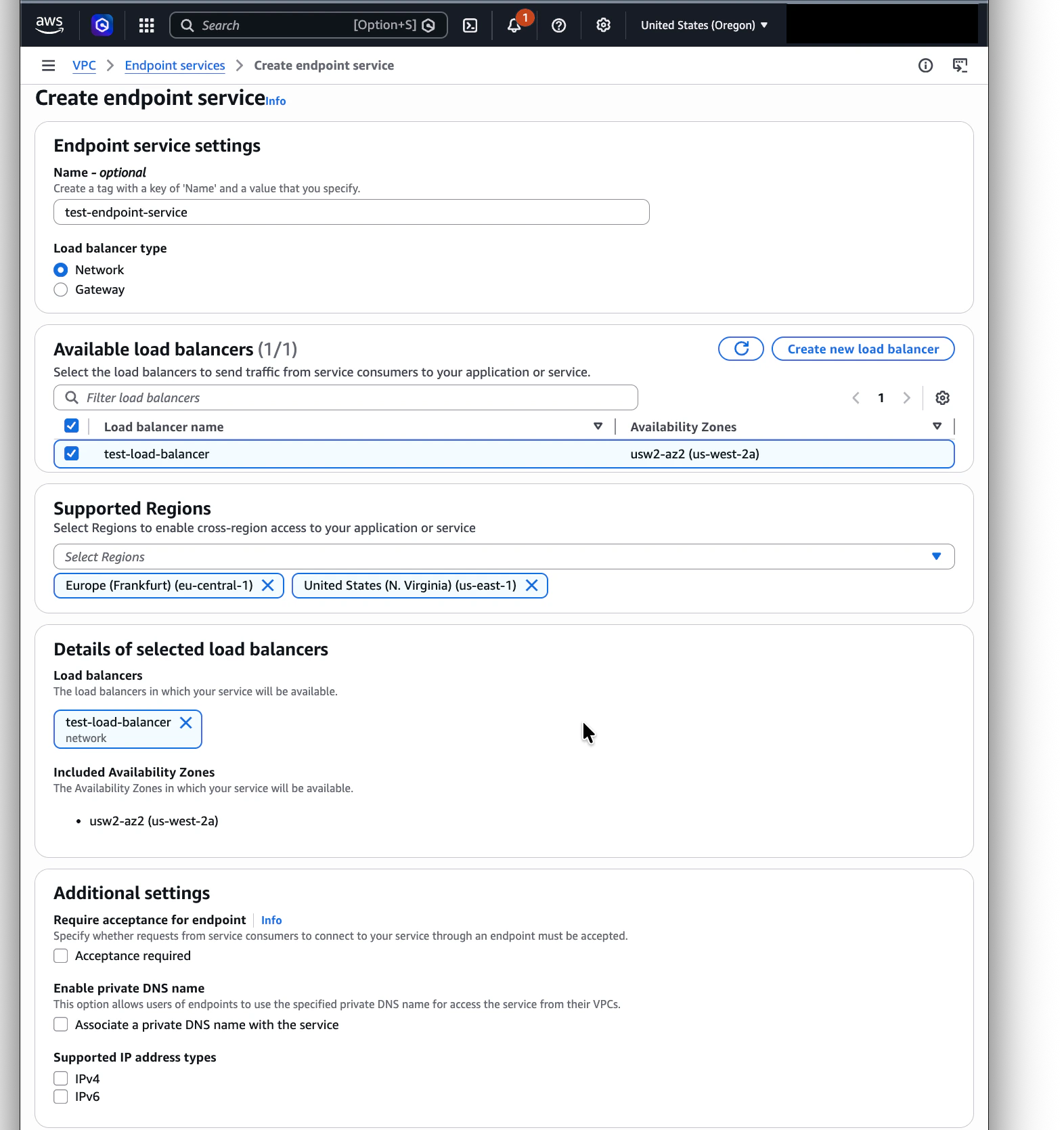
If you set “Require acceptance” to Yes, every connection request from Trigger.dev will
sit in a pending state until you manually approve it. Setting it to No lets connections
come up automatically once the principal is allow-listed.
3
Skip private DNS
Leave the “Private DNS name” option disabled. Trigger.dev tasks dial the endpoint by its
private IP, so private DNS isn’t needed.
4
Configure cross-region access (optional)
If your Trigger.dev tasks run in a different AWS region from your endpoint service, expand
the Supported Regions section and add the region(s) where Trigger.dev should be allowed to
create the VPC Endpoint from (for example, add
eu-central-1 if your service is in
us-east-1 but tasks run in eu-central-1).If your tasks and resource are in the same region, you can skip this — same-region access is
enabled by default.Cross-region PrivateLink adds AWS data-transfer cost and ~10–30ms of latency depending on the
region pair. Prefer same-region when possible.
5
Create the endpoint service
Click Create. The service is created immediately — you’ll come back to copy its Service
name once you’ve authorized Trigger.dev in the next step.
Step 4: Authorize the Trigger.dev AWS account
By default, no one can connect to your endpoint service. You need to explicitly allow Trigger.dev’s AWS account.1
Open your endpoint service
Go to VPC → Endpoint services, select the service you just created.
2
Open the Allow principals tab
Click the Allow principals tab, then Allow principals.
3
Add Trigger.dev's account
Paste the principal ARN in this format, replacing 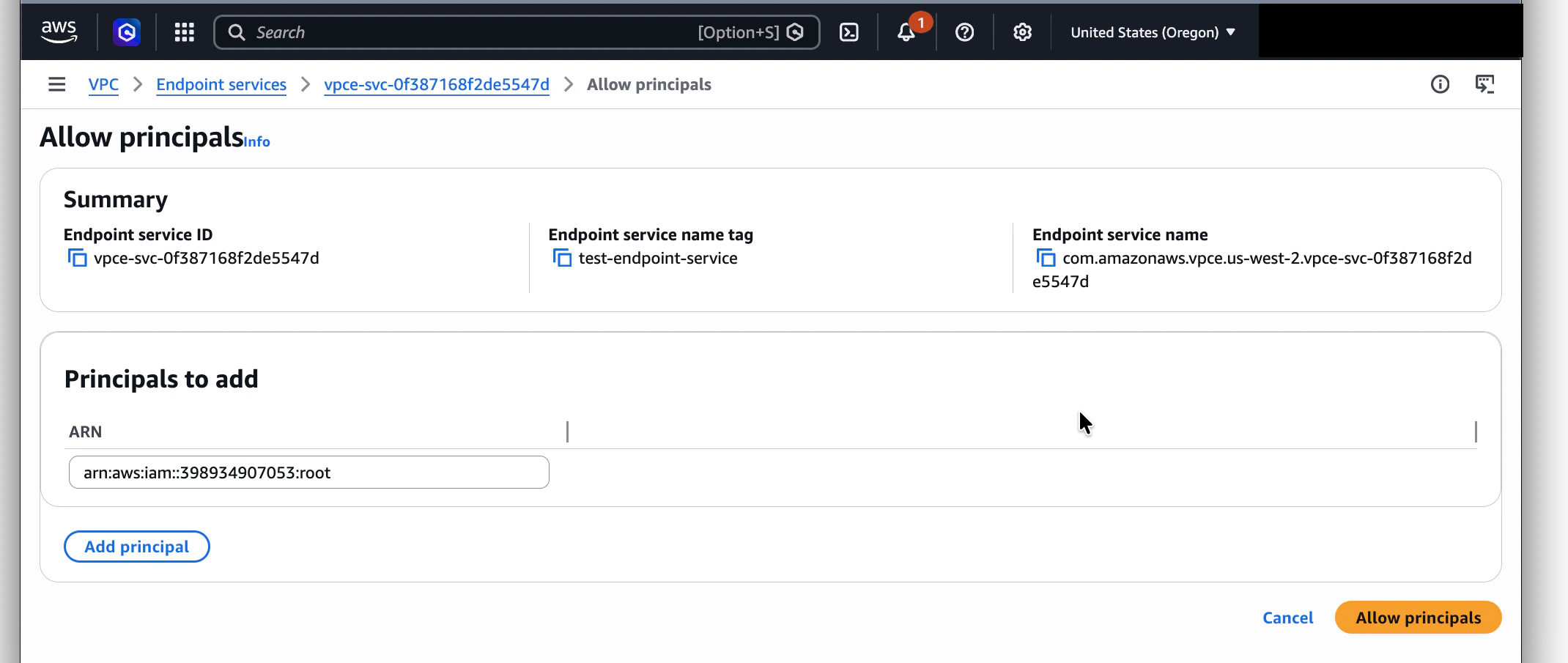
<account-id> with the Trigger.dev AWS
account ID shown in your dashboard:4
Click Allow principals
The principal is now authorized to create a VPC Endpoint targeting your service.
5
Copy the endpoint service name
On the endpoint service detail page, copy the Service name value — it looks like
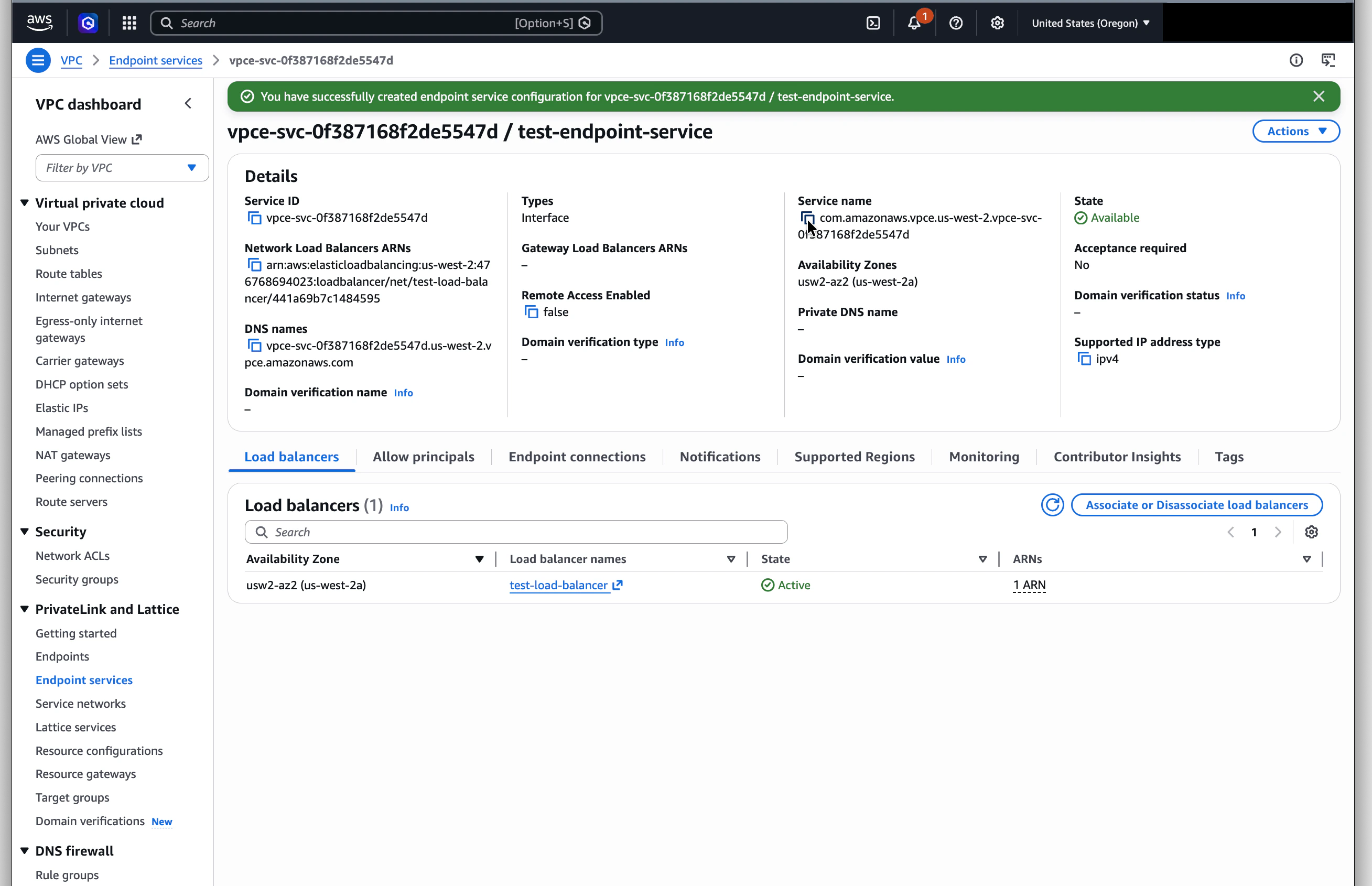
com.amazonaws.vpce.us-east-1.vpce-svc-0123abcd.... You’ll paste this into the Trigger.dev
dashboard in the next step.Step 5: Add the connection in Trigger.dev
1
Open the dashboard
In Trigger.dev, go to Organization Settings → Private Connections and click Add
connection.
2
Pick the I have my details card
Then fill in:
- Friendly name: a short, human-readable label for this connection.
- VPC Endpoint Service name: paste the
com.amazonaws.vpce.<region>.vpce-svc-...value from Step 4. - Target region: the Trigger.dev region where the VPC Endpoint is created (pick one from the list, such as
us-east-1oreu-central-1), normally the region your tasks run in. If it differs from the region your endpoint service lives in, enable cross-region access in Step 3.
3
Submit
Submit the form. The connection’s status moves through Pending → Provisioning → Active.
Provisioning typically takes 30–90 seconds.
4
Verify
Once Active, the dashboard shows the assigned private IP. Plug it into the
connection-string environment variable your task already uses (for example,
DATABASE_URL set
on the Environment Variables page) and your tasks will reach the resource over
PrivateLink.