
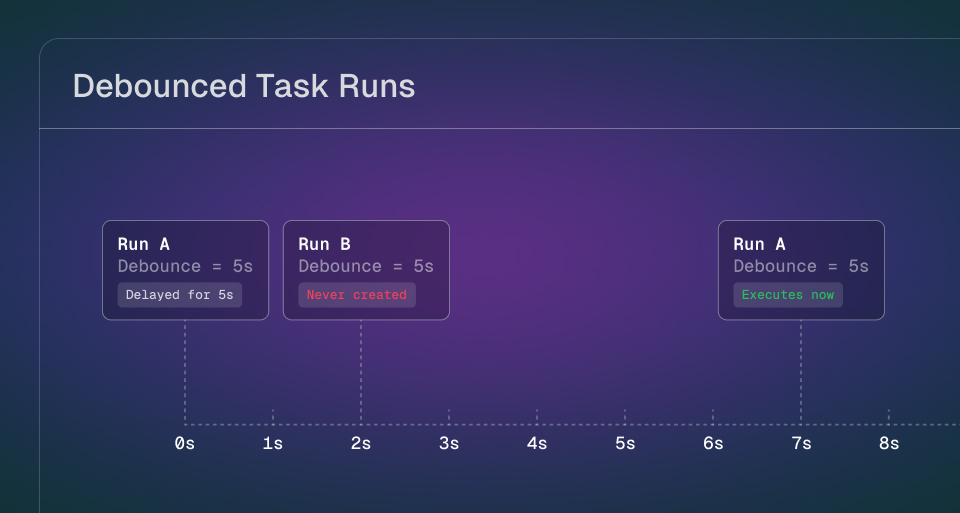
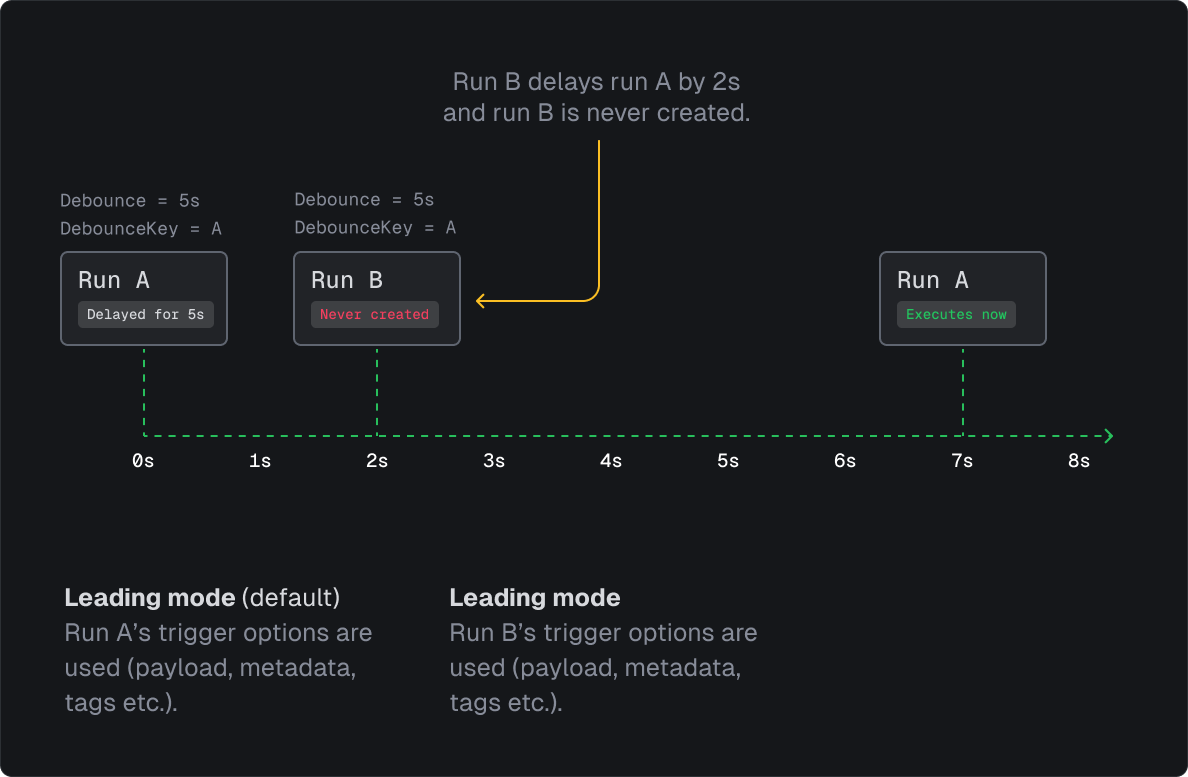
Debounced task runs allow you to consolidate multiple triggers into a single execution. When triggering a task with a debounce key, subsequent triggers with the same key will reschedule the existing delayed run instead of creating new runs. This continues until no new triggers occur within the delay window.
This is perfect for scenarios like:
- User activity updates: Consolidate rapid user actions into a single processing run
- Webhook deduplication: Handle bursts of webhooks without redundant processing
- Search indexing: Batch document updates instead of processing each change individually
- Notification batching: Group notifications to avoid spamming users
NOTE
Upgrade to SDK 4.3.1+ to use debounced task runs.
How it works
Usage
await myTask.trigger( { userId: "123" }, { debounce: { key: "user-123-update", delay: "5s", }, });
Options
- key: A unique identifier for the debounce group, scoped to the task identifier
- delay: How long to wait before executing (supports duration strings like
"5s","1m", or milliseconds) - mode: Either
"leading"(default) or"trailing"
Leading vs Trailing mode
Leading mode (default): Uses the payload and options from the first trigger. Subsequent triggers only push back the execution time.
Trailing mode: Uses the payload and options from the last trigger. The following options are updated from each new trigger:
payload- The task input datametadata- Run metadatatags- Run tags (replaces existing tags)maxAttempts- Maximum retry attemptsmaxDuration- Maximum compute timemachine- Machine preset (cpu/memory)
await myTask.trigger( { data: "latest-value" }, { debounce: { key: "trailing-example", delay: "10s", mode: "trailing", }, });
Behavior notes
- Idempotency keys take precedence: If both debounce and idempotency key are specified, idempotency is checked first
- Works with triggerAndWait: Parent runs correctly block on the debounced run.
Read the full docs for more details.